
The Rising Costs of Athletic Involvement in Rhode Island
- thelasmofoundation
- Jan 12
- 4 min read

Rhode Island has always taken pride in its tight-knit communities, competitive youth sports, and the belief that athletics help shape confident, resilient young people. But over the last decade, and especially in recent years, the cost of athletic involvement has risen to a point that should concern all of us.
Youth sports in Rhode Island are more expensive than ever, and that reality is closing doors for too many kids who simply want a chance to play, grow, and belong. As costs climb, the gap continues to widen between families who can afford to pay to play and those who cannot, even when their children have the same talent, passion, and work ethic.
What Families Are Facing
For many Rhode Island families, athletic participation no longer means a modest registration fee and basic equipment. The true cost often includes league or club fees, uniforms, travel expenses, private coaching, camps, and off-season programs that are framed as essential.
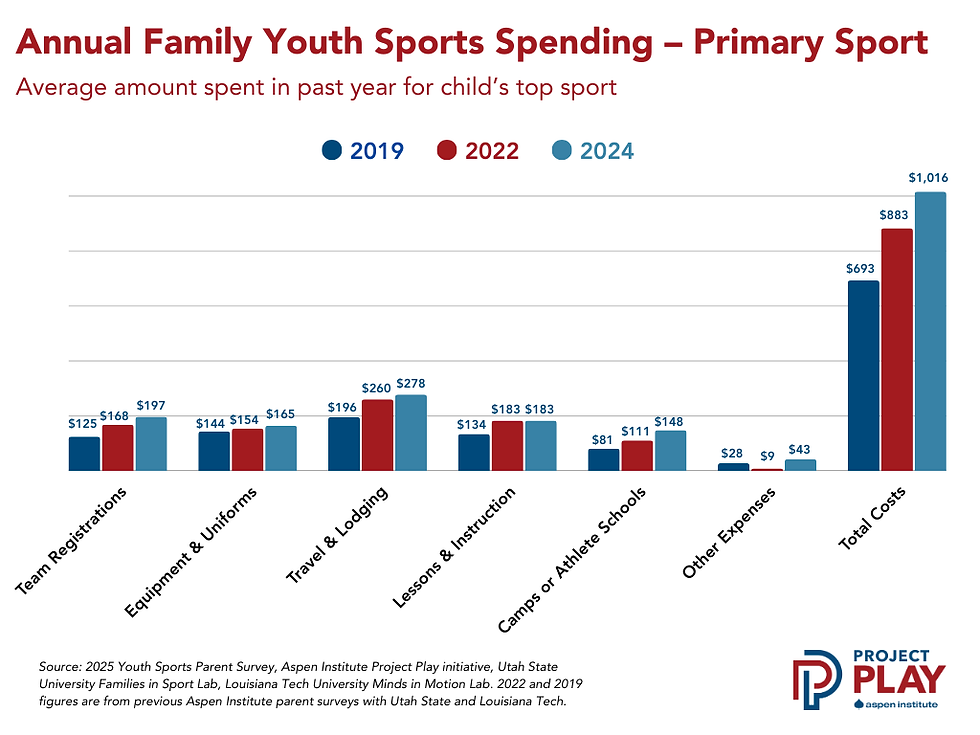
National research shows that the average family now spends more than $1,000 per year on a child’s primary sport when accounting for registration, equipment, uniforms, and travel. This figure does not include families with children in multiple sports or households with more than one child participating. According to the Aspen Institute’s State of Play 2025 report, that represents a 46% increase since 2019. For families already navigating high housing, food, and transportation costs in Rhode Island, those increases force difficult choices. Even sports perceived as relatively affordable can add up quickly when travel, gear, and training are included.
Barriers Are More Than Just Registration Fees
The rising cost of youth athletics doesn’t just affect wallets, it threatens participation and wellbeing. Families with limited income face disproportionately large barriers, particularly when private clubs, travel teams, and year-round commitments become standard. A growing body of research shows that:
Low- and middle-income families are far less likely to participate in travel or elite youth sports due to cost barriers. (EngageTU)
High costs exacerbate income-based participation gaps, with lower-income households having much more limited access to competitive opportunities.(YSBR)
Financial strain can force parents to reduce or drop their children’s involvement entirely.(goodsports.org)
This widening gap doesn’t just reduce play; it splits communities and limits opportunities for mentorship, structure, social interaction, and physical health.
Local Economic Benefits, But Local Barriers Too
Youth and amateur sports have become a powerful economic engine, with tournaments and events bringing millions of dollars in direct spending to Rhode Island hotels, restaurants, and venues, as outlined in a recent Rhode Island sports tourism projection. That analysis notes that sports tourism alone is expected to bring more than $15 million to the state in just the first quarter of 2026, underscoring how significant this industry has become for the local economy.
Yet this growth exposes a difficult truth: as the business side of sports thrives, too many local kids are being priced out of participating in the very activities generating that revenue. The field is increasingly tilted toward those who can afford club fees, private coaching, and year-round leagues, while children from lower- and middle-income families are left watching from the sidelines.
Why does this matter for Rhode Island Youth?
Sports are about far more than wins and losses. They teach discipline, accountability, resilience, and leadership. These are skills that carry over into the classroom, family life, and future careers.
When a child is shut out of athletics because of cost, the community loses more than a potential future Olympian; it loses a developing young person who could benefit from mentorship, structure, and a positive outlet.
How LASMO Foundation Is Responding
At LASMO Foundation, we are deeply committed to ensuring cost is never the reason a child stops playing. Our mission is to reduce financial barriers so every Rhode Island child has a real chance to participate in athletics, regardless of income.
We provide:
Direct financial assistance for registration and participation fees
Support for essential equipment so no athlete has to go without the gear they need
Partnerships with local leagues, coaches, and schools to identify and support at-risk families
Community advocacy for transparency and affordability in youth sports
By centering families often overlooked by traditional funding and listening to what they truly need, we help keep kids on teams, in practices, and engaged in the life lessons that sports uniquely provide. You can learn more about our mission and application process at LASMOfoundation.org.
A Call to the Rhode Island Community
Rhode Island may be small, but its spirit is mighty. To ensure that rising costs do not dictate who gets to play, every coach, parent, educator, and business leader must be part of the solution. If you believe that no child in Rhode Island should be sidelined because of their family’s financial situation, I encourage you to donate today by visting our donation page.
Together, we can ensure that as the cost of sports rises, opportunities for Rhode Island’s youth rise even higher.

Comments